
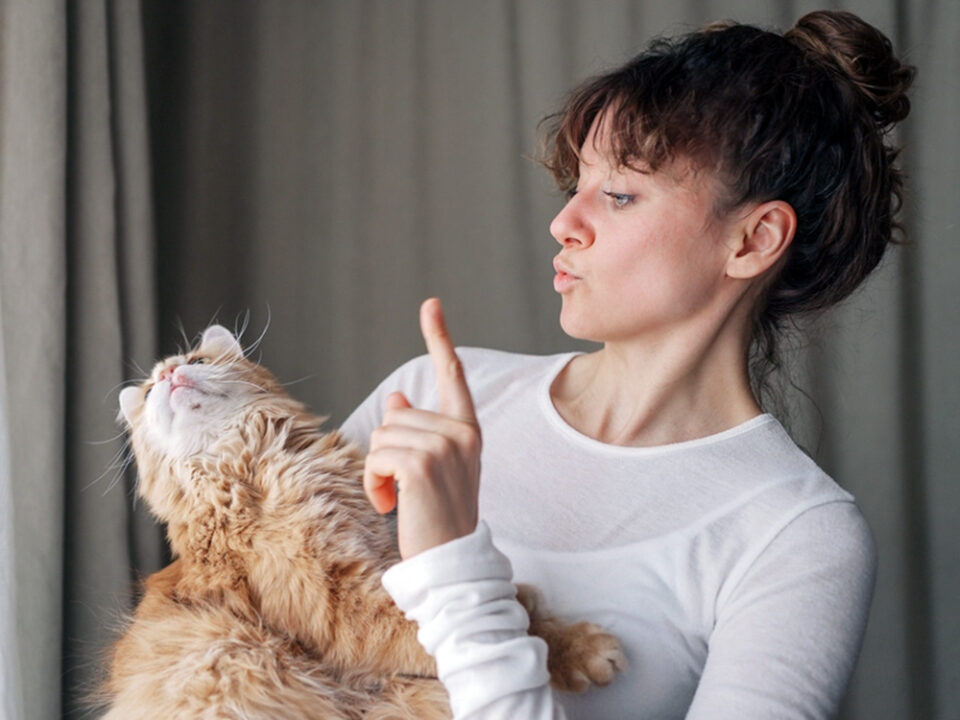
Learning How to Discipline a Cat starts with understanding that cats do not follow rules the way dogs often do, but they can absolutely learn boundaries. If your cat is scratching the sofa, knocking things off shelves, or biting without warning, you do not need to resign yourself to chaos. You just need to understand how cats actually learn.
The most effective way to discipline a cat is through immediate redirection, consistent boundaries, and positive reinforcement – rewarding good behavior rather than punishing bad. Physical punishment, yelling, or spraying water are not only ineffective, they actively damage your bond with your cat.
Do Cats Actually Understand Discipline?
Sort of – but not the way dogs do. Cats don’t have the same pack-based social hierarchy that makes dogs naturally receptive to commands and correction. A cat’s behavior is driven by instinct, environment, and what’s been rewarded (or not punished) in the past.
What this means practically: your cat isn’t being ‘bad’ out of spite. It’s doing what feels natural – scratching (to sharpen claws), biting (when overstimulated), or knocking things over (out of curiosity). Discipline needs to be about redirecting instincts, not punishing them.
What NOT to Do: Common Mistakes
| What to Avoid | Why It Doesn’t Work |
|---|---|
| Yelling or shouting | Cats don’t connect sound to behavior; it just creates anxiety |
| Hitting or swatting | Creates fear and aggression, damages trust permanently |
| Spraying with water | Cat learns to avoid you, not the bad behavior |
| Punishing after the fact | Cats can’t connect punishment to something they did minutes ago |
| Inconsistency | If the behavior is allowed sometimes, it will continue |
Discipline Techniques That Actually Work
- Interrupt immediately – the moment the bad behavior starts, make a sharp, short sound (a clap or a firm ‘no’). Timing is everything; it must happen in the moment.
- Redirect to an acceptable alternative – if they’re scratching the couch, move them to the scratching post. If they’re biting your hand during play, replace your hand with a toy immediately.
- Remove attention – for attention-seeking behavior, turning your back and ignoring completely is more effective than reacting. Any reaction, even negative, can be a reward.
- Use deterrents, not punishment – double-sided tape on furniture, citrus scents in areas you don’t want them, or motion-activated air puffers teach the environment itself to discourage behavior.
- Reward the opposite behavior – when your cat uses the scratching post or plays gently, reward immediately with a treat or praise.
Handling Specific Problem Behaviors
| Behavior | Likely Cause | Best Response |
|---|---|---|
| Scratching furniture | Natural claw maintenance, territory marking | Provide scratching posts, use tape deterrent on furniture |
| Biting during play | Overstimulation, too much hand play as a kitten | Stop play immediately, use wand toys not hands |
| Midnight zoomies | Pent-up energy, natural nocturnal instinct | Play session before bed to tire them out |
| Knocking things over | Attention-seeking or boredom | Ignore it; add enrichment toys |
| Jumping on counters | Curiosity, hunting instinct | Clear the counters, provide high perches elsewhere |
| Aggression toward other pets | Territory stress | Slow reintroduction, separate spaces, vet consult |
The Role of Environment and Enrichment
Many behavioral problems in cats trace back to boredom or stress. A cat with enough mental and physical stimulation is simply less likely to act out.
- Provide vertical space – cats feel safer and more stimulated with cat trees or shelves
- Rotate toys regularly to prevent boredom
- Make sure every cat in the house has its own litter box (plus one extra)
- Consider a window perch – watching birds outside is genuinely stimulating
- Spend 10-15 minutes in focused interactive play each day – wand toys work best
When to See a Vet or Animal Behaviorist
If a sudden behavioral change occurs – especially aggression, hiding, or litter box avoidance – see a vet first. Cats often act out when they’re in pain or unwell.
For persistent, escalating aggression or anxiety that doesn’t respond to training, a certified animal behaviorist (look for a Certified Applied Animal Behaviorist or Veterinary Behaviorist) can make a significant difference. This isn’t an overreaction – it’s just good pet ownership.
The most important thing to remember: patience works where punishment doesn’t. Cats respond to consistency, environment, and the slow building of trust.
